

Online Performance Management Systems: A Guide for HR Teams
TL;DR: An online performance management system is cloud software that puts reviews, goals, and feedback in one place that HR, managers, and employees can reach at any time. It replaces the spreadsheets, PDFs, and payroll add-ons that 77.4% of organizations still rely on for reviews, according to PerformYard's 2026 best practices study. The main gains are automated reminders and scheduling, goals tied directly to reviews, continuous feedback, and reporting that spans every team. When you compare systems, look closely at review flexibility, HRIS and payroll integrations, security, and the support you get while setting it up.
An online performance management system takes the hassle out of formal performance reviews. That matters because most performance review systems are a hassle. PerformYard's 2026 best practices study found that 77.4% of organizations still run reviews on spreadsheets, PDFs, or a payroll or Human Resources Information System (HRIS) module, and that 56% of HR teams spend four or more days managing each review cycle.
The process becomes more complex as organizations increase review frequency and add employees. Not only is it hard to conduct the reviews, but also to document the reviews, which is a critical part of the process for employee performance management and compliance.
This guide explains what an online performance management system is, how it differs from spreadsheets and HRIS modules, what it does for HR teams, and how to choose one.
What Is an Online Performance Management System?
An online performance management system is cloud-based software that HR teams use to run performance reviews, track goals, and collect feedback in one place. Tools like PerformYard help companies conduct and document performance management meetings while tracking goals and progress.
According to James Cornett, VP of Administration at the North American Meat Institute (NAMI), adopting PerformYard as an online performance management system changed their internal processes:
“We went from a manual process to an automated platform that is truly time saving, but also very easy to learn.” - James Cornett, VP of Administration, North American Meat Institute (NAMI)
Most online performance management systems exist in the cloud, accessible wherever employees and their managers may be. Remote access has become a major benefit of these systems since the shift to remote work, but there is a range of other benefits that companies and HR leaders gain through the use of an online performance management system.
How an Online System Differs From Spreadsheets and HRIS Modules
Dedicated performance software is rarely the starting point. Many teams begin with spreadsheets and PDFs, or whatever performance module came bundled with their payroll or HRIS platform. That setup holds up fine for a single annual review cycle at a small company. It starts to strain once review frequency climbs and headcount grows past what one HR person can track by hand.
Spreadsheets have no reminder system, no audit trail, and no way to roll a cycle forward, so HR ends up chasing every submission by email. Payroll and HRIS modules hold employee data well, but their review forms are usually fixed templates with limited control over rating scales, question types, or multiple review cycles running at once.
PerformYard's best practices study found that 69% of teams using dedicated performance management software give feedback more than once a year, against 46% of spreadsheet users, and that only 15% of dedicated-software users fall below a 50% review completion rate, against 23% of spreadsheet users.
What Online Performance Management Systems Make Easier for HR Teams
Traditional performance reviews rely on tedious administrative processes to track, document, and communicate performance review information. HR leaders have to remind managers to fill out reviews. The HR person may have to collect reviews in their email or a cloud storage drive. It's hard to see data from all the reviews in one place, which means it's difficult to gain any insights.
Research from the PerformYard State of Performance Management Report shows that companies complete reviews 19% faster in their second year on PerformYard than in their first, and 28% faster by their third year.
Online performance management systems remove administrative burden and provide additional benefits. Five benefits stand out most: continuous feedback, aligned goals, manager buy-in, automated scheduling, and reporting that gives you a full picture of performance across the organization.
Continuous Feedback and a More Transparent Company Culture
Online performance management systems allow broad access to information about employee performance, and how it aligns with company performance. This transparency ensures everyone knows how they and their colleagues contribute to company success. More transparent company culture is created through:
Continuous Feedback
Though some companies still conduct formal reviews annually, online employee performance management systems allow for continuous feedback throughout the year. Continuous feedback is a best practice contributing to organizational success. Managers, employees, and HR leaders have 24/7/365 access to feedback on employee performance.
Clear Goals
Having an in-person performance management conversation is a great idea, but only if you can document the discussion. Leaving it to chance that both manager and employee will recall specifics leads to miscommunication. Online performance management systems track goals to ensure everyone understands what needs to be accomplished.
PerformYard's digital performance management system displays goals on employee dashboards. Every employee and manager can see goal progress throughout the year and use the data as a reference point in meetings.

Frequent Feedback
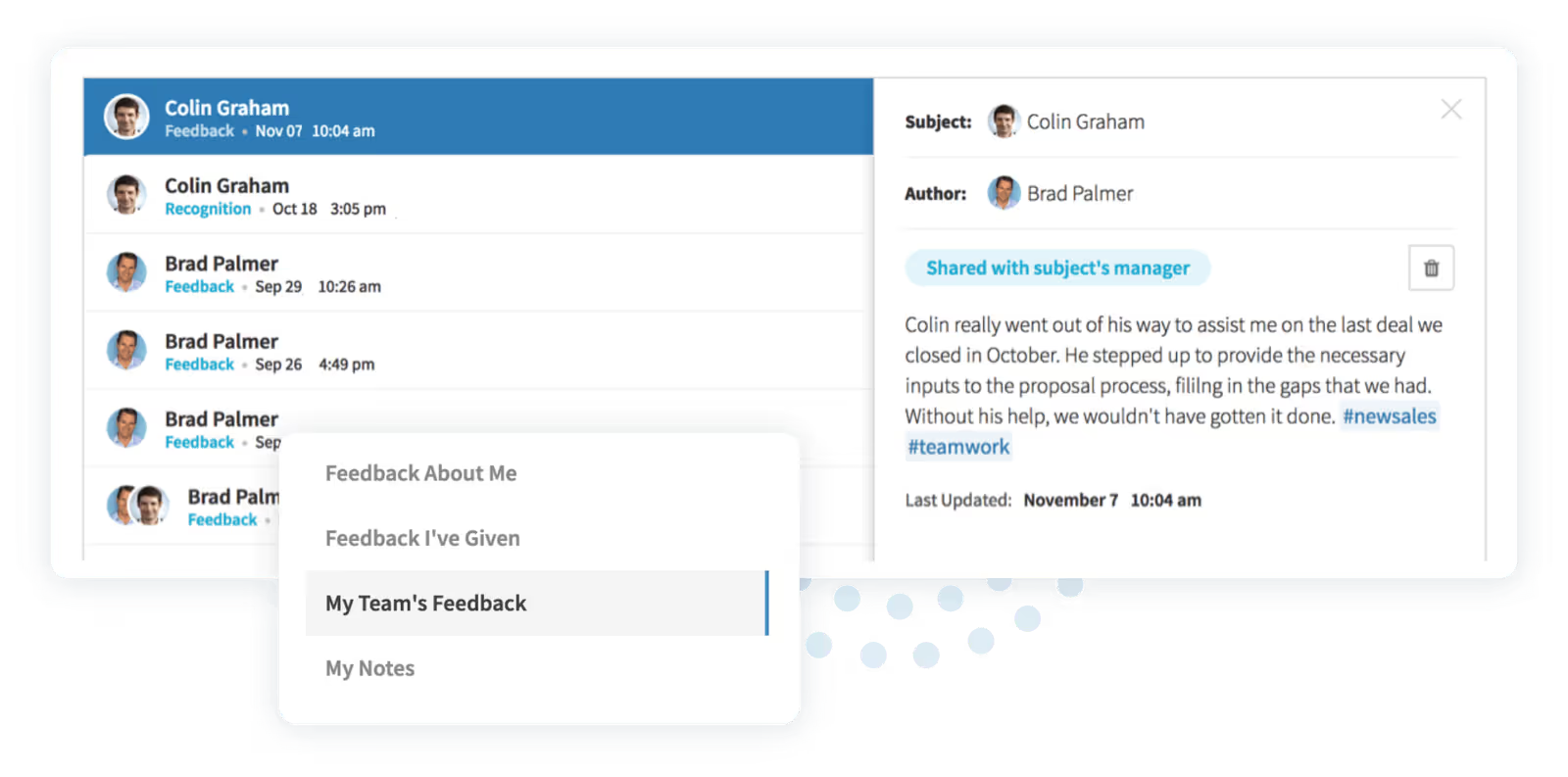
Employees need frequent feedback to perform effectively. Online employee performance appraisal systems provide a convenient, simple, and accessible way to document that feedback. Some companies default to using email to provide feedback, but that approach fails to tie feedback to the overall review process.
In PerformYard, it's easy to give feedback within the platform. That feedback is stored in the employee's dashboard where it's available to view during the employee's annual or quarterly review.
Align Individual Goals With Company Goals
In some organizations, employees may work hard but fail to align their work with company goals. Online performance management systems ensure that individual and company goals are aligned.
Real-time goal setting helps employees work on tasks that support department, division, and organizational performance. Dashboards with progress tracking allow employees and managers to monitor performance and make course adjustments. Reports provide quick visual insights into progress.
Cascading Goals
Optimum performance management happens when goals cascade from the top of the organization down to the front lines.
- The organization’s strategic objectives drive goal-setting for senior leaders.
- Senior leaders create and assign goals to their direct reports, and so on, down through the organization.
Cascading goals can also be viewed horizontally to quickly visualize and track interdepartmental dependencies.
Goal Progress Tracking
Online performance management systems provide a clear line of sight into individual and organizational performance, visible to everyone in the organization. Traditional methods of goal progress tracking are often siloed and not up-to-date. Online tracking provides a shared view of progress, real-time reporting, and easy access for all.
📈 Performance Management ROI Calculator
Get Manager Buy-In on The Review Process
Performance reviews rarely make a manager's list of favorite tasks, and giving feedback well isn't the strongest team management skill for a lot of people. Reviewing and documenting the work of five, ten, or twenty direct reports is a genuinely heavy lift, and most managers were never trained to do it.
Online performance management systems reduce the friction of performance management, leading to manager buy-in and enhanced value for all.
Email Notifications
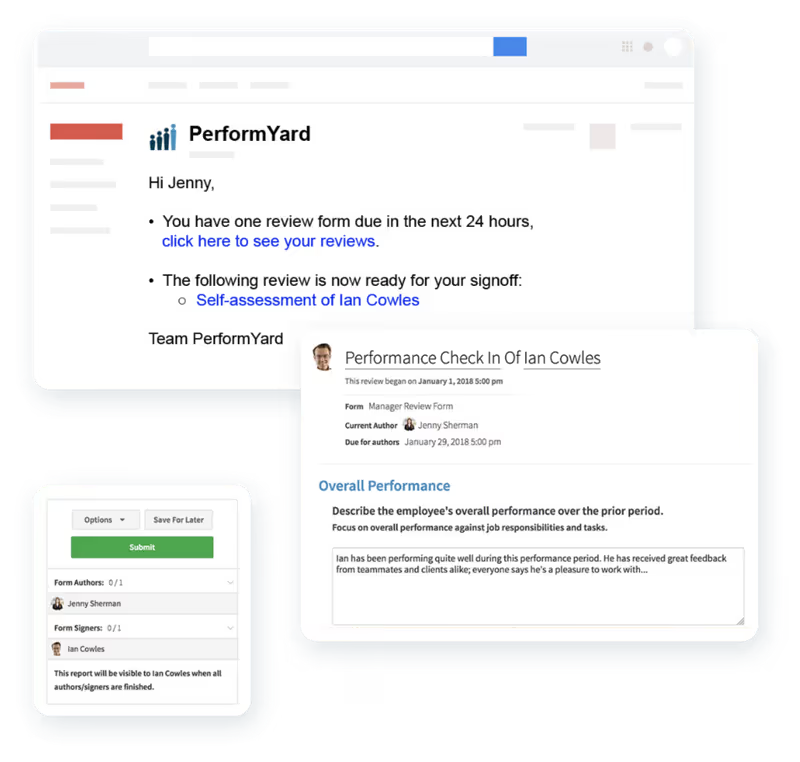
Email notifications help keep managers on top of the deliverables and dates associated with managing their staff members and providing regular feedback. PerformYard updates employees and managers with email notifications every time a review is due, as seen below.
Simplicity
Online performance management systems automate the administrative elements of the performance management process. These systems ensure documentation and provide easy access to information when needed.
PerformYard is designed to turn your existing review process into a simple system. The platform doesn't force you into a complex performance review system; it makes it easier to run your existing system. Most customers are live in about two weeks, with a dedicated customer success manager who builds the first review cycle with them.
Automate Review Scheduling
Online performance management systems use automation to take the complexity out of the review scheduling process. Using an online performance management platform like PerformYard relieves the administrative burdens of needing to remember work anniversaries and schedules around them. The platform will always let you know when an employee is ready for their next review.
Track Multiple Review Cycles in One Dashboard
What are performance management systems good for if they don't make your job easier? The more employees you have to track, the more challenging the process can be. Tracking multiple review cycles in one dashboard lets you quickly see which reviews are coming.
Reporting and a Bird's-Eye View of Employee Performance
Managers often struggle to track performance across teams.
- Who’s contributing the most?
- Who’s lagging behind?
- Who needs course correction?
- Who needs more kudos?
An online performance management system gives you a birds-eye view that you can see at any time, wherever you may be. The reports will highlight top performers and reveal which employees need help.
Managers Can See Historical Review Data
Having access to historical data can help track employee progress. It can also be a significant aid when a manager is taking on a new employee or taking over another department. With traditional systems managers would need to request and access hard-copy files that may not be complete, thorough, or up-to-date.
Managers Can See Employee Metrics in a Report
Employee metrics can help you track individual employee performance. These metrics can include goal completions, sales metrics, or anything else you can dream up. Metrics and reports also give you insights into how employee performance may vary. You can compare employees across teams or compare one department to another.
You’ll have best practices to share with others and see who may need additional training, resources, and support to improve performance.
PerformYard helps you track and monitor the following metrics in reports, for example:
- Reviews completed
- Employee ratings
- Goals attained
- OKRs
- KPIs
- 360-reviews
- Self-assessments
- Exit interview information
HRIS, Payroll, and Security Integrations
An online performance management system should work alongside the HR systems you already run, not replace them. Most mid-size organizations keep payroll and core employee records in an HRIS and want performance data to stay in sync with it, without manual exports.
PerformYard integrates with HRIS and payroll platforms including ADP, Workday, BambooHR, Paylocity, UKG, Rippling, and Gusto, and uses SFTP for systems without a native connector. Employee data syncs from the HRIS, so review cycles reflect the current org chart without manual exports.
An online performance management system should work alongside the HR systems you already run, not replace them. Mid-size organizations typically keep payroll and core employee records in an HRIS and want performance data to stay in sync with it, without manual exports. PerformYard customers commonly already run a payroll or HRIS platform, with ADP named more often than any other, followed by Paylocity, UKG, Workday, Rippling, and BambooHR.
Security matters as much as data sync, because performance records include ratings, compensation inputs, and documentation for employment decisions. Look for SSO through SAML 2.0, SCIM provisioning so access ends when someone leaves, and an independent audit. PerformYard is SOC 2 Type II certified and runs annual penetration testing.
What Are The Best Online Performance Management Systems?
When choosing an online performance management system some important criteria stand out: simplicity, flexibility, and the ability to tie into your existing review process are key.
Use these questions to compare options:
- Can it run your current review structure, including different rating scales and review types for different teams, without IT support?
- Does it connect goals, feedback, and 1:1 notes to the review form so managers write from evidence rather than memory?
- Does it integrate with your HRIS and payroll platform, and does it meet your security requirements?
- What support do you get during setup and after the first cycle, and how long does implementation take?
Whether you need a simple solution for annual reviews or a platform that can help you manage more complex performance management needs, PerformYard has the features and flexibilty to help you upgrade form a manual review process.
Book a demo with the team and see how it compares as performance management software for HR teams.
FAQs
What Is a Performance Management System and What Are Its Key Features?
A performance management system is the process and software an organization uses to set goals, collect feedback, run reviews, and track employee performance over time. Key features of an online system include configurable review forms, goal tracking, continuous feedback, automated reminders and scheduling, reporting, and HRIS integration.
How Do You Monitor Employee Performance Online?
You monitor employee performance online by tracking goal progress, review ratings, and ongoing feedback in one system, then reviewing reports by employee, team, and manager. Regular 1:1 check-ins recorded in the same system give managers a running record to draw on when it is time for a formal review.
What Are The Benefits of an Electronic Performance Management System?
The main benefits of an electronic performance management system are less administrative work for HR, more frequent feedback, goals linked to reviews, and reliable records for pay and promotion decisions. PerformYard customers complete reviews 19% faster in their second year on the platform than in their first, according to its State of Performance Management Report.
Key Terms Glossary
HRIS (Human Resource Information System): the core system of record for employee data, such as payroll, benefits, and org structure, that many companies run alongside, rather than instead of, a dedicated performance management platform.
Review cycle: he defined period, such as annual, quarterly, or project-based, during which goal-setting, feedback, and formal evaluations take place for a team or organization.
Cascading goals: a goal-setting structure where organizational objectives flow down to senior leaders, then to their direct reports, and on through the organization, so individual goals stay tied to company strategy.
Continuous feedback: ongoing, informal performance input exchanged between managers, peers, and employees outside of the formal review cycle, as distinct from a single annual or quarterly evaluation.

65 Employee Performance Goal Examples (With Free Template)

Best OKR Management Software - Top Tools By Type

